Why DIY DPF Cleaning Is Not a Substitute for Professional On-Vehicle Cleaning
A Diesel Particulate Filter, or a DPF, is designed to store exhaust soot to reduce emissions. Accumulation of soot over time in the DPF can limit exhaust flow and reduce energy efficiency. In such conditions, it is better to seek professional DPF cleaning. However, many vehicle owners may opt for DIY DPF cleaning, which is not advisable. If you notice signs of a clogged DPF that needs cleaning, we would advise getting professional services. It can help restore your engine’s peak performance. This blog will further provide a detailed comparison of DIY DPF cleaning vs on-vehicle DPF cleaning.
Common DIY DPF Cleaning Methods
Before comparing DIY DPF cleaning vs on-vehicle DPF cleaning, let’s discuss the common DIY DPF cleaning methods. Many diesel vehicle owners often attempt these DIY methods to delay professional maintenance or avoid repair costs. However, these methods might not be effective enough to remove soot build-up and restore engine performance. Understanding what these methods may or may not achieve can help you make an informed decision.
- DPF cleaning additives – These are widely available in the market and presented as DIY DPF solutions. They are supposed to be poured into the fuel tank. Further, they claim to lower the temperature needed for soot combustion during regeneration. Some products are also available in the form of spray cleaners. They are supposed to be applied directly through sensor ports or intake components. Both the additives and spray cleaners might help remove mild soot build-up. However, they do not repair faulty sensors, injector problems, or other engine-related issues causing clogged DPF. As a result, this DIY method may provide limited and temporary improvement.
- Forced highway regeneration – Many diesel vehicle owners might take their vehicles on a prolonged highway drive for passive or active regeneration. Maintaining higher engine speeds and exhaust temperatures might help burn accumulated soot. For a mildly clogged DPF with all engine components functioning properly, this method might work. However, if there is a mechanical fault or the previous regeneration attempt has failed, this method might cause additional stress.
- Removing and washing the DPF – Some vehicle owners might opt for removing the DPF and cleaning it with water, pressure washers, or homemade cleaning solutions. However, these methods might harm your vehicle. For instance, high-pressure water might damage ceramic substrates, which are the core physical filter inside the DPF. On the other hand, improper drying may cause trapped moisture inside the filter. Further, homemade solutions might leave behind harmful residues. Considering the possible risks associated with these methods, we would recommend avoiding them. Instead, you should hire professional on-vehicle DPF cleaning services.
Limitations of DIY DPF Cleaning
Now that you know about the common DIY DPF cleaning methods, let’s further discuss their limitations.
Cannot determine underlying issues
Various factors can lead to a clogged DPF. DIY DPF cleaning cannot help you identify underlying causes such as –
- Faulty differential pressure sensors
- Malfunctioning exhaust gas temperature sensors
- EGR valve failures
- Turbocharger performance issues
- Fuel injector problems
- Engine combustion inefficiencies
If you don’t address these issues, they will cause frequent clogged DPFs.
No professional equipment
Professional on-vehicle DPF cleaners use professional diagnostic tools, differential pressure testing equipment, controlled cleaning systems, performance verification equipment, etc. These tools help determine whether the DPF has been fully restored.
Temporary results
DIY DPF cleaning often produces temporary results. For instance, vehicle owners may notice that briefly after using an additive or completing a highway drive, the DPF warning light might disappear. However, as the result is temporary, warning lights might reappear, and engine performance might decline within a short time.
Services Included in Professional On-Vehicle DPF Cleaning
When comparing DIY DPF cleaning vs on-vehicle DPF cleaning, we have discussed the methods commonly used in the DIY process and their limitations. Let’s further discuss the steps involved in the professional on-vehicle DPF cleaning process.
Inspection and diagnostics
In this step, technicians scan the engine control module for diagnostic trouble codes. They measure DPF soot and ash loading, evaluate differential pressure readings, check exhaust temperature sensors, verify proper fuel system operation, etc. The purpose is to determine whether your DPF needs cleaning or any additional repairs.
Specialized cleaning process
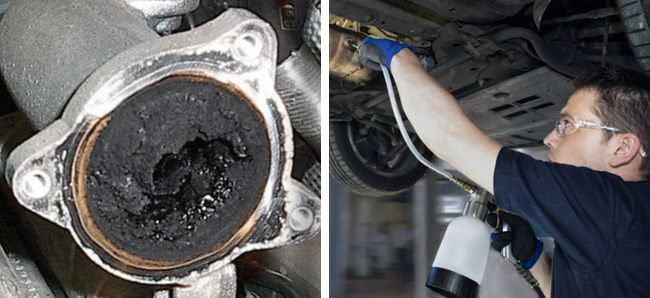
Technicians use appropriate equipment to introduce DPF cleaning solutions and safely remove accumulated soot without removing the DPF. The process helps restore exhaust flow, remove harmful deposits, improve regeneration efficiency, minimize vehicle downtime, and protect DPF components from damage. Since technicians use specialized equipment and proven procedures, this cleaning method is safer and more effective than DIY methods.
Performance verifications
At the end of the on-vehicle DPF cleaning, technicians verify that the system is functioning properly. In this regard, they monitor differential pressure readings, confirm proper exhaust flow, clear diagnostic fault codes, test regeneration performance, ensure warning lights remain off, and perform final system checks.
Benefits of Professional On-Vehicle DPF Cleaning
The benefits of on-vehicle DPF cleaning are not just limited to removing soot build-up. Discussing its other benefits will help you understand why it is a better alternative for your diesel vehicle when comparing DIY DPF cleaning vs on-vehicle DPF cleaning.
- Restore engine performance – As a result of professional on-vehicle DPF cleaning, drivers will likely notice improved acceleration, better throttle response, increased engine power, and smoother overall performance.
- Improved fuel efficiency – Professional on-vehicle DPF cleaning restores proper exhaust flow, efficient engine operation, and reduced fuel consumption, especially for commercial fleets and heavy-duty vehicles.
- Extend DPF life – Routine professional on-vehicle DPF cleaning can help remove harmful soot build-up before it causes permanent damage. It further helps extend the DPF’s lifespan while protecting other emission system components from unnecessary wear.
- Reduced downtime – Professional on-vehicle cleaning can help restore DPF performance faster, allowing your vehicle to hit the road within a few hours. Keeping vehicles on the road helps improve productivity and reduce operational disruptions.
- Supports emissions compliance – Professional on-vehicle DPF cleaning helps your vehicles meet emission regulations, reduce excessive exhaust smoke, maintain compliance with inspection requirements, etc. It helps fleet operators and commercial businesses avoid costly fines, failed inspections, and unnecessary operational delays.
Therefore, when comparing DIY DPF cleaning vs on-vehicle DPF cleaning, the latter is beneficial for your diesel vehicles. Edmonton DPF Service offers professional on-vehicle DPF cleaning to help restore your engine’s peak performance. By thoroughly inspecting your vehicle, we can help determine whether your DPF needs on-vehicle cleaning, repair, or replacement.