The Complete Process of Professional On-Vehicle DPF Cleaning
Professional on-vehicle Diesel Particulate Filter (DPF) cleaning is a maintenance procedure that helps restore the performance of your diesel vehicles. Unlike traditional DPF cleaning, in this procedure, the technicians are not required to remove the DPF from the vehicle. Instead, the technicians introduce special cleaning solutions to the DPF while it remains installed to remove accumulated soot. This blog will take a deep dive into explaining the complete procedure of on-vehicle DPF cleaning.
Role of DPF in a Diesel Vehicle
During diesel combustion, the DPF helps capture soot and fine particulate matter before they exit through the exhaust system. As the exhaust gases pass through the filter’s porous walls, the DPF traps the harmful particles, while the cleaner gases continue through the exhaust. Maintaining proper exhaust flow helps maintain engine power, improve fuel economy, support turbocharger operation, and reduce unnecessary strain on other emission control components. However, over time, the trapped soot accumulates. In such conditions, your DPF needs professional cleaning to maintain optimal performance.
On-Vehicle DPF Cleaning Process
The following steps are involved in the on-vehicle DPF cleaning process. Let’s discuss further.
Step 1 – Initial Vehicle Inspection and Diagnostics
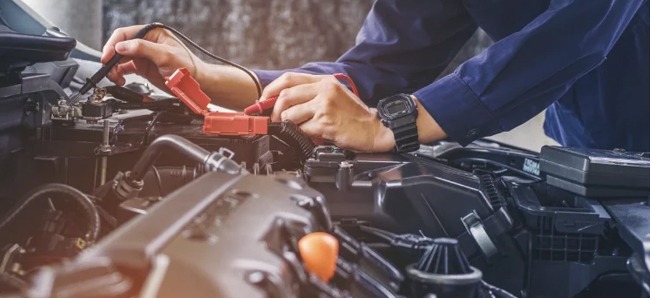
The first stage of the on-vehicle DPF cleaning process involves thorough inspection and diagnostics. In this stage, technicians will perform a thorough inspection to determine the condition of your DPF. The purpose is to identify the underlying causes of your clogged DPF. It will help them determine that an on-vehicle DPF cleaning solution is the ideal solution to prevent unnecessary repairs. During this phase, technicians will check the following components.
- Electronic system scan – In this step, the technicians will connect diagnostic software to the vehicle’s engine control module (ECM). Using this software, they can check active and stored fault codes related to the DPF, emissions system, engine performance, and exhaust aftertreatment components. It will help them identify the source of the problem and accordingly follow the proper cleaning procedure. Besides, they can also assess the estimated soot and ash build-up. Additionally, they can review the vehicle’s regeneration history. Frequent regeneration attempts might indicate excessive soot build-up or an underlying engine issue that technicians can address during DPF cleaning.
- Physical inspection – Next, technicians will physically inspect the exhaust system to identify issues, such as damaged pipes, loose clamps, etc., that can affect exhaust flow. Further, they will inspect components, such as differential pressure sensors, temperature sensors, and pressure lines, for issues that may cause inaccurate readings or trigger unnecessary warning lights. The technicians will also check for exhaust leaks, cracked housings, damaged sensor ports, or signs of external damage before performing the cleaning procedure. If the DPF has any structural damage, it needs to be repaired or replaced instead of being cleaned.
Step 2 – Preparing the DPF for Cleaning
In the second stage of the on-vehicle DPF cleaning process, our technicians need to prepare the DPF for cleaning. To ensure safe and efficient DPF cleaning, technicians need to perform the following setup.
- Specialized cleaning equipment setup – First, the technicians will connect professional DPF cleaning equipment to the designated access point.
- Preparing cleaning solution and tool – Based on your vehicle and DPF conditions, technicians will select appropriate cleaning solutions accordingly. They will also prepare additional tools, diagnostic equipment, and monitoring devices for efficient DPF cleaning and to verify its effectiveness.
- Protecting surrounding components – Before starting the cleaning procedure, technicians will take steps to protect the engine and other exhaust components. It will help reduce the risk of contamination, prevent accidental damage, etc.
Step 3 – Applying Professional DPF Cleaning Solution
In this third stage of the on-vehicle DPF cleaning process, our technicians will apply a professional DPF cleaning solution. They will use specialized equipment to inject the cleaning solution through approved access points. It helps ensure the solution reaches areas with soot build-up. The professional cleaning agent helps soften and break apart stubborn soot and carbon deposits that limit the exhaust flow. After application of the cleaning solution, technicians will allow sufficient time for it to penetrate deep into the soot build-up for effective soot removal.
Step 4 – Cleaning and Regeneration
Once the cleaning solution loosens the soot build-up, it’s time to perform controlled regeneration for soot removal. Technicians perform DPF cleaning through the following process.
- Running the engine through a cleaning cycle – Technicians operate the engine under monitored conditions to support the cleaning process. Based on the vehicle type, they perform forced regeneration using diagnostic equipment. It allows the exhaust temperature to elevate for a safe and effective cleaning process.
- Perform regeneration – The elevated exhaust temperature during regeneration burns out the loosened soot. It helps restore the DPF’s filtering capability. Further, it allows exhaust gases to pass through the exhaust system more freely. Reduced backpressure allows the engine and turbocharger to operate more efficiently, improving overall vehicle performance. Throughout regeneration, technicians will continuously monitor exhaust temperatures to ensure safe DPF cleaning.
Step 5 – Post-Cleaning Diagnostics and Performance Verification
After the cleaning process is complete, technicians will perform a final evaluation to ensure the DPF is working properly and the vehicle is ready to operate. In this regard, they will check the following aspects.
- Clearing fault codes – Technicians will use the diagnostic equipment to clear any DPF-related warning lights or fault codes triggered by soot accumulation. They will also verify that the regeneration process is completed successfully.
- Measuring system performance – Technicians will measure differential pressure across the DPF. Lower pressure indicates that exhaust gases can move through the filter more efficiently. Further, technicians will compare pre- and post-cleaning data to confirm improved exhaust flow. It is crucial for better engine performance, lower backpressure, and more consistent regeneration. The technicians will use diagnostic software to verify that soot loading is reduced. It will help determine whether the cleaning process has helped restore the DPF’s condition.
- Road testing – Technicians will perform controlled road testing to evaluate engine acceleration, throttle response, and overall drivability. Further, they will monitor the dashboard during and after the road test for any DPF or engine warning lights. Finally, they will confirm whether the vehicle performs reliably under normal driving conditions.
Technicians at Edmonton DPF Service conduct these steps as part of the on-vehicle DPF cleaning process. Once they complete diagnostics, road testing, and performance checks, they can clear the vehicle for regular operation. We perform mobile DPF cleaning services as part of preventive maintenance to restore your vehicle’s peak performance.